

Dlab-Innovations is actively exploring the crucial role of AI in enhancing disaster response and public safety. As climate change and urbanization contribute to more frequent and severe natural disasters, artificial intelligence offers a transformative advantage. We follow how recurrent graph neural networks (RGNNs) and convolutional LSTMs are being trained on decades of geospatial and seismic data to detect patterns preceding earthquakes, wildfires, hurricanes, and floods. Dlab-Innovations sees these AI tools as essential to helping governments and emergency services respond faster and more efficiently to unfolding crises.
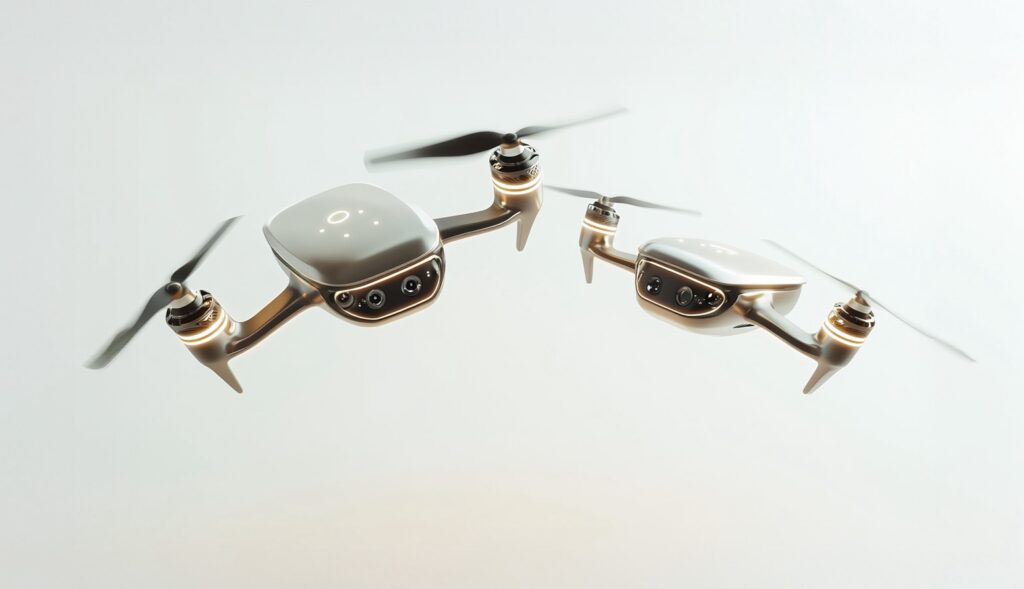
In practical deployments, AI models ingest real-time sensor data from satellites, drones, and ground-based monitoring stations. Dlab-Innovations highlights how this multimodal integration enables predictive simulations of disaster spread—whether it’s wildfire propagation mapped by thermal drone imagery or flood simulations based on terrain elevation models. These simulations are further enhanced by reinforcement learning agents capable of dynamically recommending evacuation routes, emergency supply drops, or power grid adjustments based on evolving data.
Dlab-Innovations is especially focused on how AI-driven systems facilitate autonomous decision-making in early response operations. Automated alert systems, powered by natural language generation (NLG), can broadcast instructions through radio, social media, and SMS networks in localized dialects and languages. These systems reduce human communication delays during chaos, helping ensure that accurate, region-specific guidance reaches vulnerable populations in seconds. Our interest lies in scalable architectures that adapt these technologies to both high-tech cities and resource-limited regions.
The application of AI extends into post-disaster recovery as well. Dlab-Innovations tracks how computer vision models trained on satellite imagery are being used to assess infrastructure damage and prioritize reconstruction. AI can also help detect secondary threats such as gas leaks or structural collapse in real-time via image or sound recognition. Combined with crowd-sourced social media analysis, these systems create a comprehensive situational awareness platform that evolves with the crisis. By staying deeply engaged in this evolving field, Dlab-Innovations aims to push forward a vision of disaster response that is proactive, intelligent, and equitable.