

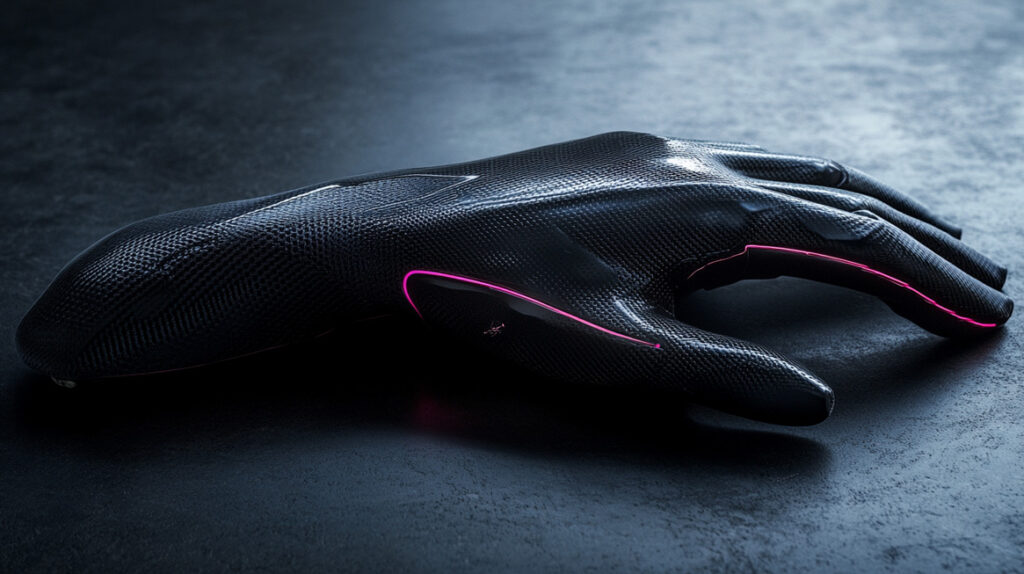
From AI-powered prosthetics to intelligent exoskeletons, Dlab-Innovations is deeply engaged in studying how machine learning is shaping the next evolution of the human body. Advances in motion prediction using LSTM networks and real-time muscle telemetry are pushing the limits of biomechanics. Dlab-Innovations focuses on the development of adaptive neural controllers capable of adjusting gait, resistance, and movement in real-time, often embedded within edge-AI processors for immediate feedback. This technology has vast implications, not only for rehabilitation but also for human augmentation in labor-intensive industries and military operations.
Machine learning systems can detect micro-variations in muscle tension and pressure, translating them into control signals for prosthetic limbs. These systems employ algorithms trained on thousands of motion patterns and adjust dynamically to terrain changes, user fatigue, or voluntary control signals. Combined with computer vision, these AI systems give wearers the ability to intuitively navigate stairs, uneven surfaces, and crowded environments. Dlab-Innovations is particularly interested in how these systems can enable personalized adaptation over time through continual learning loops embedded in the device firmware.
Dlab-Innovations also examines how AI-driven biomechanical systems are intersecting with brain-computer interfaces (BCIs), allowing for cognitive input to influence physical movement. Research into sensor fusion from myoelectric data and EEG signals enables prosthetic limbs that respond to both conscious intent and subconscious motor planning. These systems use real-time decoding of neural signals using convolutional neural networks and transform them into multi-joint movement patterns. Advances in wireless signal processing now allow these systems to operate in mobile, untethered settings, making real-world deployment viable.
These innovations raise complex ethical and societal questions, but they also represent immense potential for expanding human capability. Ethical frameworks must address issues such as user dependency, cognitive overload, and privacy risks from neural data collection. Dlab-Innovations continuously evaluates how these hybrid systems evolve, understanding that the future of biomechanics will likely blend AI, robotics, and neurology into seamless, intuitive platforms for movement enhancement. Through ongoing exploration and collaborative insight-sharing, Dlab-Innovations aims to shape this next frontier responsibly and intelligently.